Generate a Story

Génère une histoire absurde et fais-lui faire le tour du monde en traductions, tout au copier-coller. À l'arrivée, compare avec le départ : qu'est-ce qui s'est perdu en route ? Generate an absurd story and send it around the world in translations, all by copy and paste. At the finish line, compare with the start: what got lost along the way?
Partie 1Part 1L'histoireThe story
1
Génère une histoire absurde : remplis les cases, le générateur fait le reste. Recommence jusqu'à en tenir une qui te fait rire.
Generate an absurd story: fill in the boxes, the generator does the rest. Try again until you get one that makes you laugh.
Le générateurThe generator
plot-generator.org.uk
2
Dans ton Drive, crée un Google Doc story_tonprénom et colles-y l'histoire de départ. Le geste : sélectionne le texte, Ctrl+C (⌘C sur Mac), clique dans le Doc, Ctrl+V (⌘V). C'est le copier-coller : tu vas le faire dix fois aujourd'hui.
In your Drive, create a Google Doc called story_yourname and paste the starting story into it. The move: select the text, Ctrl+C (⌘C on Mac), click in the Doc, Ctrl+V (⌘V). That's copy-paste: you'll do it ten times today.
Partie 2Part 2Le tour du mondeAround the world
1
Ouvre le traducteur, colle ton histoire et traduis-la en français. Copie le résultat dans ton Doc.
Open the translator, paste your story and translate it into French. Copy the result into your Doc.
L'outilThe tool
translate.google.com
2
Repars du français vers une langue lointaine : japonais, roumain, indonésien… Plus c'est loin, mieux c'est. Chaque étape passe par ton Doc : c'est lui, le carnet de voyage.
From the French, head for a faraway language: Japanese, Romanian, Indonesian… The further, the better. Every stop goes through your Doc: that's the travel log.
3
Après 4 ou 5 langues, retraduis vers la langue de départ. Le voyage est bouclé.
After 4 or 5 languages, translate back into the starting language. The journey is complete.
Partie 3Part 3L'arrivéeThe finish line
1
Mets le départ et l'arrivée côte à côte dans ton Doc, et souligne tout ce qui a changé. Un vrai exemple de classe, après 4 langues :
Put the start and the finish side by side in your Doc, and underline everything that changed. A real class example, after 4 languages:
giant hatbig hat
troll versionchopped version
Kim KardashianKim Cardassian
La même histoire, au départ puis à l'arrivée. Personne n'a fait exprès.The same story, at the start and at the finish. Nobody did it on purpose.
2
Pourquoi ça s'use ? Chaque traduction choisit des mots presque pareils. Et presque, répété cinq fois, ça fait différent. Les savants ont un mot pour ça : l'entropie. Recopie une copie de copie, et l'original s'efface.
Why does it wear out? Each translation picks words that are almost the same. And almost, repeated five times, adds up to different. Scientists have a word for it: entropy. Copy a copy of a copy, and the original fades away.
3
Lis les deux versions à voix haute à quelqu'un : laquelle fait rire ?
Read both versions out loud to someone: which one gets the laugh?
BonusLes survivantsThe survivors
1
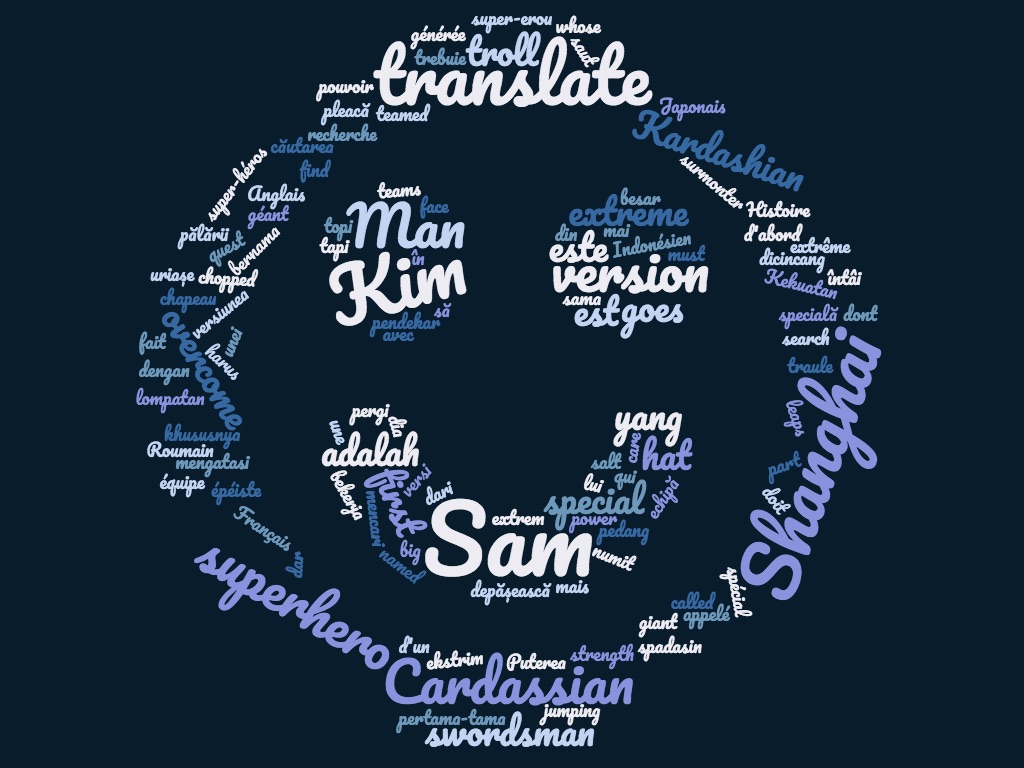
Colle toute ta chaîne (toutes les langues d'un coup) dans le nuage de mots : les mots qui ont survécu au voyage sortent en grand.
Paste your whole chain (every language at once) into the word cloud: the words that survived the journey come out big.
Le bonusThe bonus
nuagesdemots.fr